

The Stone Witness to Empires: Galata Tower
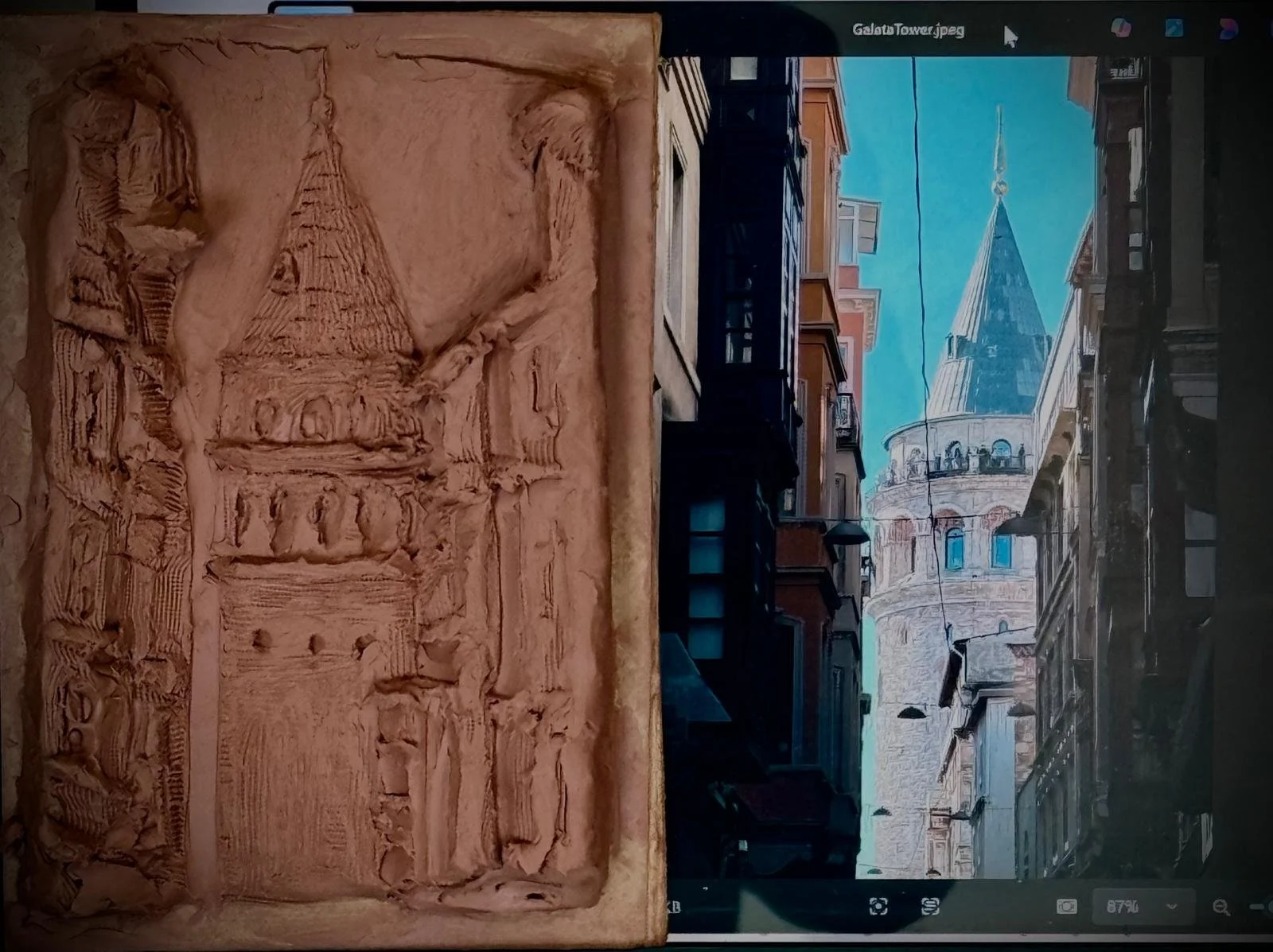
Standing tall over the Karaköy skyline, the Galata Tower (Galata Kulesi) is more than just a great photo op—it is a stone witness to the rise and fall of empires. It has transitioned from a military bastion to a fire lookout, and finally, to the cultural icon of Istanbul it is today.
I laid out this quick-sculpt at the tower and put in another hour back at my studio.
Historical Timeline
The tower we see today isn't the first one to stand on that hill, but it is certainly the most resilient.
The Genoese Origins (1348): Built by the Genoese colony in Constantinople, the tower was originally named Christea Turris (Tower of Christ). It was the highest point of the fortifications surrounding their citadel, Galata.
The Ottoman Era (1453 onwards): After Mehmed the Conqueror took the city, the tower served various roles. It was used as a jail, an observatory by the astronomer Taqi ad-Din, and eventually a fire lookout station.
The Legend of Hezarfen: In the 17th century, according to the traveler Evliya Çelebi, Hezarfen Ahmed Çelebi allegedly donned wooden wings and flew from the top of the tower, across the Bosphorus, to Üsküdar. Whether fact or folklore, it cemented the tower's place in aviation mythology.
Modern Restoration: Having survived numerous earthquakes and fires, the tower underwent a major restoration in the 1960s to replace its wooden interior with concrete and was updated again in 2020 to become a formal museum.
Cultural Significance
The Galata Tower isn't just a building; it’s a symbol of the "other" side of Istanbul—the European, cosmopolitan, and rebellious sibling to the historic peninsula of Sultanahmet.
The "Bridge" Between Cultures
For centuries, Galata was the neighborhood of merchants, diplomats, and minority communities (Greeks, Jews, Armenians, and Italians). The tower overlooks this melting pot, representing the city’s long history of global trade and cultural exchange.
A Romantic Icon
In Turkish pop culture, the tower is often personified. A famous legend suggests that if you climb the tower for the first time with your lover, you are destined to marry them. It is also frequently depicted in poetry and art as being "in love" with the Maiden’s Tower (Kız Kulesi) across the water, forever gazing at her from afar.